For Your Edification
Posted: November 14, 2014 Filed under: Business, Innovation, Leadership | Tags: Jacob Morgan, Leaders Eat Last, Simon Sinek, Start with Why, The Future of Work, The Innovators, Walter Isaacson 1 CommentAs an avid reader, I usually have multiple books going at any one time. Here is a current sampling:
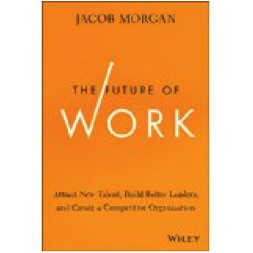


The Future of Work by Jacob Morgan
The Innovators by Walter Issacson. Did you know that one of the innovators behind the first computer studied at UW Madison? That “punch cards” were initially used for loom-based weaving? A low cost, infinite resource was a breakthrough for programming. Ada Lovelace, daughter of Lord Byron, wrote a series of notes in the 1840s that outlined the key concepts in the first electronic computer nearly 100 years before it was made in the 1940s? While parts of the book at too tedious for me, there are some very interesting facts that I never really appreciated.
Leaders Eat Last by Simon Sinek. I just started this one, but really enjoyed his previous Start with Why.
Weekly Download 14.17
Posted: August 6, 2014 Filed under: Change, Innovation, Leadership, Weekly Download Leave a comment
Here’s a recap of news and notes from around the Web that caught my attention over the past week or so.
Don’t Let Incumbents Hold Back the Future. Instead of protecting the past from the future, what about protecting the future from the past to allow innovation to flourish?
As Pharma Jobs Leave N.J., Office Space Ghost Towns Remain. Innovation in pharma has shifted from large legacy suburban corporate campuses (some due to merger) and appeared in/near large research based universities. Is this trend a harbinger for large monolithic corporations? Does it reflect the new economy where coordination can happen outside of large formal hierarchical organizations? Does it reflect the new worker driven by independence, passion, and meritocracy? Could this also be happening in software technology where the traditional front runners in innovation give way to an ecosystem of innovators and entrepreneurs? Perhaps it has already happened.
Going beyond facts and figures, business leaders who know How to Tell a Great Story have an advantage over others. Good stories attach emotions to things and create “sticky” memories.
To Change the Culture, Stop Trying to “Change the Culture.” Taking on an entire culture is too big of a mountain to climb all at once. Smart companies start by taking on smaller efforts that, over time, will culminate in larger change.
No, this isn’t the Onion, it’s the BBC. A gymnasium exclusively for dogs has opened. What’s next?
Defining Innovation
Posted: June 6, 2014 Filed under: Innovation | Tags: Horace Dediu, innovation, innoveracy 1 CommentI continue to hear and read about “innovation” in the current business press. In my opinion, as a word it has been grossly misused. Relatively few of those who say they are being innovative are actually achieving it.
I have been enamored with Horace Dediu’s blog Asymco for a while. Here is a key quote from a recent post titled Innoveracy: Misunderstanding Innovation.*:
“Understanding that innovation requires passing a market test and that passing that test is immensely rewarding both for the creator and for society at large means that we can focus on how to make it happen. Obsessing over the mere novelties or inventions means we allocate resources which markets won’t reward.”
He suggests in the image below that innovation is the culmination of what is useful, unique, valuable and new. It is both hard and rewarding.

Thanks, Horace, for providing a thorough discussion and perspective on how hard innovation really is. And for a visual reminder that innovation is not a synonym for novelty, creation or invention. A marketplace test makes the difference.
*Dedicated ZMAB15 readers may recall that I previously referenced this blog post in Weekly Download 14.4. It has stuck with me, and I felt it deserved repetition and elaboration.
 ZMAB15