Providing Quick Meaning to Data
Posted: September 4, 2015 Filed under: Innovation | Tags: Edward Tufte, Gareth Cook, infographics Leave a comment According to The New Yorker, Abe Lincoln liked infographics*, putting me in good company. I was exposed to Edward Tufte (an American statistician and expert in informational graphics) and his series of books more than a dozen years ago. His representations of data, and the stories that came from their effective display, were elegant and powerful. My fascination continues today.
I recently purchased The Best American Infographics 2014, a self-explanatory compilation by Gareth Cook. It is a beautiful collection of examples and the insights they reveal. It will join other my other treasures that include:
- Minard’s Sources
- Russian Space Exploration—”Cyclogram” Time-Chart of the Salyut 6 Mission (Important difference—mine isn’t the original priced here!)
Despite all of our technology advances, it still takes a creative mind to determine how to craft a story from the data. Or, perhaps it’s the reverse: representing the data differently creates learning and then knowledge. It’s all in how you ask questions of the data and interpret the answers. Regardless, I can’t get enough.
*From Mashable: “Information graphics or infographics are graphic visual representations of information, data or knowledge. These graphics present complex information quickly and clearly, such as in signs, maps, journalism, technical writing, and education.”
Weekly Download 15.14
Posted: September 1, 2015 Filed under: Weekly Download Leave a comment Here’s a recap of news and notes from around the Web that caught my attention over the past week or so. There’s a theme: feeling nostalgic for simpler things and simpler times.
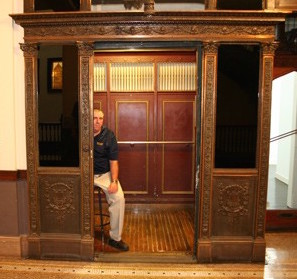
Change doesn’t come easy. With Remembering When Driverless Elevators Drew Skepticism, NPR draws on history to make an excellent point. If it took 45 years and a major strike by elevator operators to drive automation, what are all of the hurdles to overcome with autonomous cars?
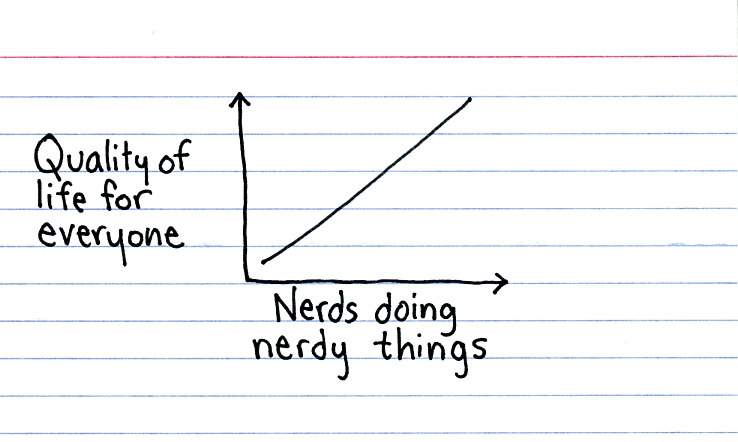
Many friends and colleagues know I like to doodle, and have frequently used hand-drawn diagrams to make a point rather than spending a lot of time with computer tools to draw the same. Simple diagrams and infographics intrigue me. Here are a couple of excellent examples:
- Virtually everything posted on Indexed, and a recent favorite card titled Arts & Sciences
- Sketch Guy: Personal Finance on a Napkin
There is a lot of hype, but Myths about millenials provides data that says we might be just creating our own stories from broad generalizations. Good advice here:
“To get the most out of young workers, it may in fact be wiser to put less emphasis on collaboration and corporate do-goodery, and more on rewarding individual performance and providing clear paths to career progress. Companies need to recognise that individual differences are always bigger than generational differences.”
Vacation planning Before Google Maps was quite a time-intensive, manual process. I remember my grandfather using AAA TripTik booklets during their driving trips throughout the lower 48 in his semi-retirement and retirement years. In just a few short months, the 630 mapping strips will no longer be manufactured. RIP, AAA TripTiks.

When Pen Meets Paper
Posted: August 27, 2015 Filed under: Pens | Tags: Evernote, Levenger Circa, Moleskine, Post-it Notes, Rhodia, Todoist Leave a comment“The act of putting pen to paper encourages pause for thought, this in turn makes us think more deeply about life, which helps us regain our equilibrium.” — Norbet Platt
Among my inner circle of friends, family and co-workers, it’s well known that I like pens. “Like” as in being somewhat obsessed with nice ones to the point that I couldn’t tell you how many are in my collection. Or if I could guesstimate how many, it would be too embarrassing to reveal.
Using my good pens, rather than just possessing them, requires paper. I’ve always had some type of planner, book or journal to record notes and task items. Post-it Notes, Rhodia or Moleskine journals and Levenger Circa products adequately fill my paper need.

Photo by Mark Baker
Numerous technologies have come along to try to convert us away from paper, including the PalmPilot (remember that oldie but goodie?), early smartphones, pre-smartphones, tablets, watches and now cloud-based tools (Evernote, Todoist, etc.) that store and synchronize data across devices. The marketplace may be driving this development, but research is holding steady in favor of the old-fashioned method. A plethora of studies consistently show that physically writing something down does a better job of committing it to memory that typing it. 4 Benefits of Handwriting Notes Vs. Typing on Laptops succinctly reflects the findings from an oft-cited 2014 study The Pen Is Mightier Than the Keyboard—Advantages of Longhand Over Laptop Note Taking.
Even for a technophile like myself, deleting something off a virtual to-do list never feels as satisfying as the manual process. There’s just something about the tactile feel of pen and paper in hand, and the feeling of accomplishment in making that checkmark by hand and having a permanent, tangible record of accomplishment. Long live the paper journal—and the pen (or pens) to go along with it!
Additional resources:
- A previous blog post: The Demise of the Pen
- Looks like I need to check out this store: shinola
- One of my favorite pen shops from Milwaukee opens a Madison location: For the love of a pen
- My thoughts exactly: Why Startups Love Moleskines
 ZMAB15