Cultural Bias, Translation and Learning
Posted: June 18, 2014 Filed under: Business, Education | Tags: Abbott and Costello, culture, Who’s On First? 1 CommentOne lesson learned on my recent business trip to India: idioms don’t always translate. Case in point, in a meeting with several colleagues, I said, “This process is like explaining water to fish.” It didn’t take. The conversation quickly devolved as the Americans tried to explain the meaning to our Indian counterparts (What were we…mammals? Did the mammals eat the fish? Or drink the water?). I felt like Abbott and Costello doing “Who’s On First?” Needless to say, we all had a good chuckle trying to unravel this one.
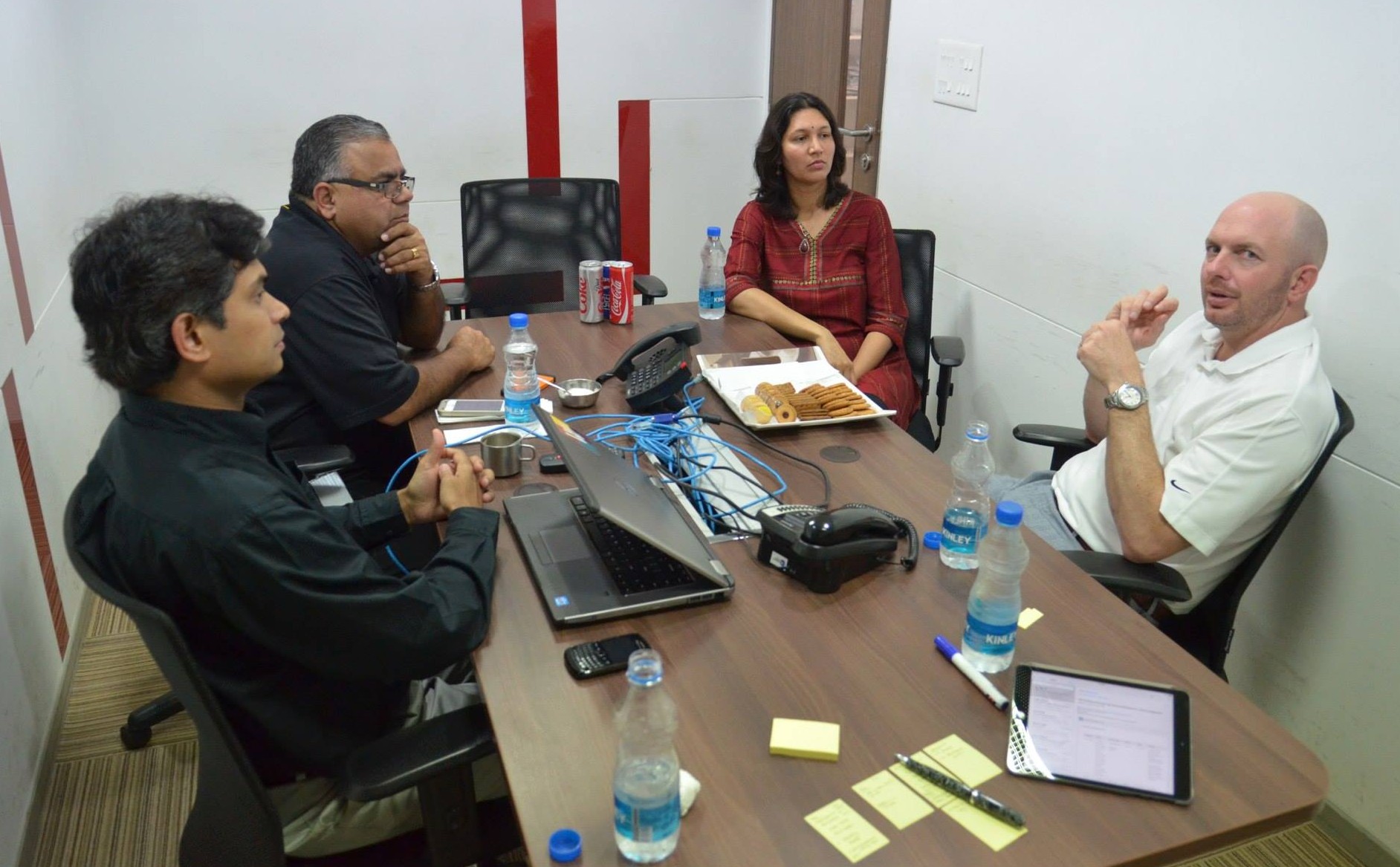
Photo by Mark Baker
The key takeaway is that we don’t always appreciate our culture, or ways of working, or knowledge until we see it from the viewpoint of others who have a different cultural background. Note that I said “different,” not better or worse, just different. Are we open to new perspectives? Do we relish the opportunity to be uncomfortable and truly learn? Can we take advantage of others’ experiences without judgment? I’d like to think so.
This was shared by my India counterparts, and was met with many chuckles, even within their culture: Indian Headshakes.
For my Indian friends (and young friends) to appreciate Abbot and Costello: Who’s On First.
Mindfulness and Happiness at Work
Posted: June 16, 2014 Filed under: Business, Cycling | Tags: Boris Groysberg, Dan Harris, Ellen Langer, happiness, meditation, mindfulness, Robin Abrahams, Shawn Achor 1 Comment
Photo by Mark Baker
Meditation, enlightenment and the pursuit of happiness were once considered the purview of New Age gurus, yogis and hippies—those folks who were “out there.” Now, these concepts, often encompassed under the banner of “mindfulness,” are moving into the mainstream and are being embraced in the business world. Let’s take a look at who’s leading the charge and what they are saying.
“Mindfulness is a process of actively noticing new things.”—Ellen Langer
- Mindfulness in the Age of Complexity. This Harvard Business Review article features an Interview with Ellen Langer, professor of psychology at Harvard. Her research on mindfulness has revealed that, “… by paying attention to what’s going on around us, instead of operating on auto-pilot, we can reduce stress, unlock creativity, and boost performance.” Langer links mindfulness to business practices and leadership at multiple points. Additional resources include her books Mindfulness and Counterclockwise: Mindful Health and the Power of Possibility.
- Another excellent article from Harvard Business Review is Manage Your Work, Manage Your Life, by Harvard professors Boris Groysberg and Robin Abrahams. Here, the authors debunk some of the myths about work/life balance, but also show deliberate choices can help reconcile conflicts between the various roles and responsibilities we all have. They look at five major themes: “defining success for yourself, managing technology, building support networks at work and at home, traveling or relocating selectively, and collaborating with your partner.”
- Another Harvard prof, author Shawn Achor turns conventional wisdom on its head by showing that instead of success leading to happiness, happiness leads to success. The Happiness Advantage: The Seven Principles of Positive Psychology That Fuel Success and Performance at Work explores tested methods to improve performance and maximize potential.
- Moving away from the academic bent, Nightline anchor Dan Harris takes readers along on his journey through the worlds of spirituality and self-help to discovery the benefits of meditation in 10% Happier: How I Tamed the Voice in My Head, Reduced Stress Without Losing My Edge, and Found Self-Help That Actually Works–A True Story.
Here’s a simple tenet for balance and happiness that I keep in mind: know what you love and love what you do. Living to work is not a privilege that comes easy. What routines do you have that allow you to be clear about who you are and what you enjoy? For example, I enjoy the sensory aspects of cycling…the focus on breathing, cycling technique and being engulfed by the surrounding sights and smells. It helps me reduce the daily noise of work and focus on the important longer-term items necessary for success.
Weekly Download 14.10
Posted: June 11, 2014 Filed under: Business, Technology, Weekly Download | Tags: Accenture, enterprise IT, Quartz, Tab Dump, user-centric IT, Very Short List Leave a comment Here’s a recap of news and notes from around the Web that caught my attention over the past week or so.
The Next Generation Enterprise Platform explores the need “for a technical approach for the next generation enterprise that’s beyond what is currently available, or maybe more accurately, supports the need to use available technology in a somewhat different way.”
User-Centric IT: Transforming IT to Put People First looks at a new paradigm for enterprise IT. The five core principles resonate with me:
- User-Centric IT serves the business by empowering people.
- User-Centric IT adapts to the way people work, not the other way around..
- People, information and knowledge must connect in real time.
- Mobility is a work-style preference, not a device..
- Security should be inherent and transparent to the user experience.
A graphic overview of Accenture’s six key IT Trends 2014. You can click on each box for a deeper dive. Then, take a second look at the trends in a circle graph that shows the evolution from technology to the building blocks for new business models.
New ways of consuming information are making news:
- Have you heard of Quartz? Think Tumblr meets Wired magazine. This is old media (Atlantic Media) innovating to stay relevant.
- Very Short List describes themselves as a “delightful e-mail that shares cultural gems from a different curator every day.”
- Tab Dump is a curated list of news available via RSS, Twitter or email.
 ZMAB15
