The Long Tail
Posted: May 21, 2015 Filed under: Business, Change | Tags: AOL, BMG Music Club, Chris Anderson, Muppets, The Long Tail, Verizon, vinyl records Leave a comment“The Long Tail” by Chris Anderson was originally an article published in Wired in 2004 that later became a book. Read a synopsis of “The Long Tail” theory here.
Listening to NPR in the car on the way to work last week, I heard three stories that reminded me of the subject line above.
Story 1: The Muppets Return to ABC’s fall prime time schedule
 The Muppets were created in 1955 and became popular after they joined the Sesame Street cast in its 1969 debut season. Later, they had The Muppet Show (which aired from 1976-1981), a dozen or so movies, and a second TV show. This latest iteration is toured as an adult version. Hmm…I’m not so sure this will work. Who will watch it and why? If they are targeting boomers who fall asleep early like me, perhaps it’s a good thing that it is scheduled to air at 7 p.m. Central.
Story 2: Vinyl records are cool again
Vinyl sales were virtually extinct in 2005, with less than a million copies sold. In 2014, the category had rebounded to achieve over nine million copies. This still pales in comparison to historical vinyl sales. Heavyweights such as Michael Jackson’s Thriller, the Eagles Their Greatest Hits (1971-1975,) Billy Joel’s Greatest Hits, Vol. 1 & 2, Led Zeppelin’s Led Zeppelin IV, Pink Floyd’s The Dark Side of the Moon, and AC/DC’s Back in Black have each surpassed more than 20 million copies sold. If vinyl continues its resurgence, can the return of the BMG Music Club be far behind?
Story 3: Verizon buys AOL
AOL today is not your parent’s AOL of the past. Hip and trendy resources such as TechCrunch, engagedet, and The Huffington Post are all owned by AOL. With Verizon’s takeover of AOL, we’ll see an unprecedented marriage of media and technology. Shingy approves.
Clearly, our current internet/web/mobile connected world provides a low-cost distribution network that can generate and push out a lot of content. This creates boundless opportunities at the long tail. Playing on nostalgia with the baby boomer generation is one strategy that seems to be paying off. What is old is new again…but perhaps on a smaller scale.
The Evolution of Personal Technology
Posted: May 18, 2015 Filed under: Change, Technology | Tags: Android, Apple Watch, Blackberry, Franklin Day Planner, Outlook, Palm Pilot, Time System Leave a commentI have always tried to be organized in both my professional and personal life, and have employed many technology devices to support these efforts. I can recall using versions of the Time System planners and Franklin Day Planners early in my career. Going further back, I think I even had a modular address book that I received for high school graduation.
Later, the Outlook-centric work desktop became a corporate standard, with contacts, calendars, and email all in one place. Initially calendars weren’t shared, but it was commonplace to print them out on a weekly basis. Gradually, things migrated to all electronic, all of the time.
Then came the ubiquitous Palm Pilot and other competing personal digital assistants. They synced with the Outlook platform so you could have a current, portable download. They were clunky compared to today’s standards, but were convenient and considered advanced at the time. You were cool in the business world if you were sporting a Palm Pilot.
The next generation was the smartphone. I recall my wife (an extremely dedicated Palm Pilot user) asking, “Why would you ever want your calendar in your phone?” This form factor brought numerous features together. Perhaps the two most important initially were being always synced and having the ability to communicate via email from a small device. I hear there are still some dedicated Blackberry users out there who have not been able to tear themselves away from a physical keyboard, but their ranks are dwindling (from 85 million worldwide in September 2013 to 46 million in September 2014). By comparison, Android has over 1 billion worldwide users. As smartphones continue to add apps and additional functionality, their potential seems unlimited.
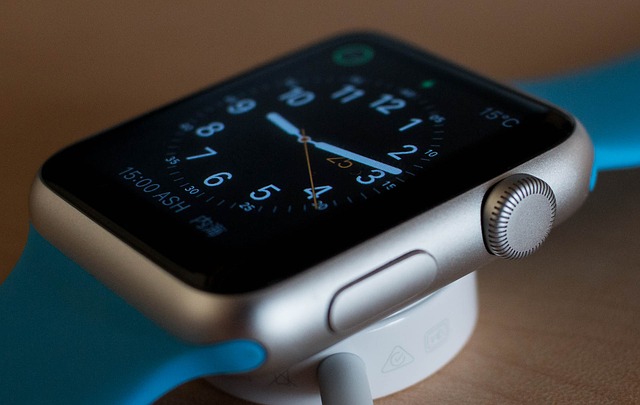 Now, into the marketplace comes the connected watch. Recently, our household gained its first Apple Watch (I’m assuming it won’t be the last). However, it’s not mine – it’s my wife’s. Yes, Donna, the person who couldn’t see the need for her calendar in her phone, has a computer on her wrist. It’s a new category for sure. Fitness tracking, notifications, easy-view messages, weather, and more, both yet-to-be-discovered and yet-to-be-developed.
Today, personal technology devices have allowed our personal and professional lives to become seamless. With data coming in and going out continuously, communication is rich, frequent, and sometimes overwhelming. While I certainly appreciate and take advantage of all of the technology at my disposal, sometimes I get nostalgic for simpler times. Sometimes there is no substitute for paper and pen. Excuse me while I go look in my archives for my Time System.
Emotional Intelligence
Posted: May 13, 2015 Filed under: Leadership, Technology | Tags: emotional intelligence Leave a comment I’ve touched on the subject of emotional intelligence a couple of times in this blog (here and here), but it’s such a fascinating topic that it bears addition discussion. Why You Need Emotional Intelligence to Succeed includes excellent graphics that capture the highlights. A large part of being effective has to do with what you see in yourself and in interactions with others. If we believe this, how do we incorporate it into our daily and weekly practices?
We are so busy and constantly wired in, filling every little bit of time with interactions on our mobile devices, that sometimes person-to-person connections get the short shrift. Recently I did an experiment to test how invested I am in the relationship with my cell phone. I challenge you to do the same.
- Set the timer on your phone for 30 minutes.
- Do not touch your phone until the timer goes off.
What happened? Did you feel anxious (as I did) to not be in possession of your phone for more than a few minutes?
I love the productivity and convenience of mobile devices, and they are crucial to my work. However, I also think there is a balance. To be truly effective, we also need to be self-aware and socially aware. We need to make space (time and place) in our lives to think and to engage with others and the world around us. Let’s regain the ability to be away from our devices and not experience withdrawal symptoms. I’m working on it!
 ZMAB15