Weekly Download 15.4
Posted: March 5, 2015 Filed under: Leadership, Weekly Download | Tags: 80/20 Rule, emotional intelligence, Joseph Juran, Pareto Principle, Vilfredo Pareto 1 Comment Here’s a recap of news and notes from around the Web that caught my attention over the past week or so.
How the 80/20 Rule Helps Us be More Effective. I always thought full credit for the concept of the 80/20 Rule (a.k.a. the Pareto Principle) was due to economist Vilfredo Pareto. Clearly, attribution must also be given to Joseph Juran, one of the key thought leaders in the Quality movement. “The vital few and trivial many” is a common way Juran referenced this principle.
How We Trick our Brains into Feeling Productive delves into the many ways we attempt to rationalize our decisions and actions. “Structured procrastination” is what my prioritized task list is all about. Forcing myself to do the most important item is the intent, but sometimes I substitute something that is further down the list. Now I know why.
The headline Signs That You Lack Emotional Intelligence is sure an attention-grabber. This topic has been around since the 1980s, but was popularized by Goleman’s book of this title in 1995. One section in the article that resonated with describes gaps that occur in the communications process between “Intent” (what the speaker means) and “Impact” (what the receiver hears). Here are a few examples:
What you say: “At the end of the day, it’s all about getting the work done.”
What others hear: “All I care about is the results and if some are offended along the way, so be it.”
What you say: “If I can understand it, anyone can.”
What others hear: “You’re not smart enough to get this.”
What you say: “I don’t see what the big deal is.”
What others hear: “I don’t really care how you feel.”
Recently I have been in conversations where I felt a very different impact than what I believe the speaker intended. Later, I mentally replayed the conversations to see if I could discover what was going on and why I felt that way. Now I have an explanation and can be mindful of this gap in the future. What are gaps are you creating?
The Seven Most Influential Things I Read in 2014
Posted: January 12, 2015 Filed under: Business, Change, Leadership, Misc. | Tags: agile teams, continuous productivity, Davos, holacracy, mindfulness, self organizing, Theory U Leave a comment Amidst the flurry of year-end recaps, several bloggers did an iteration of “This Most Influential Things I Read This Year.” This is a very interesting question—here’s my take.
Theory U. “Theory U proposes that the quality of the results that we create in any kind of social system is a function of the quality of awareness, attention, or consciousness that the participants in the system operate from.”
Continuous Productivity: New tools and a new way of working for a new era. “Continuous productivity is an era that fosters a seamless integration between consumer and business platforms.“
Davos: Mindfulness, Hotspots, and Sleepwalkers. All the signs are present that mindfulness is reaching the tipping point.
The Re-working of “Work”. “This report analyzes key drivers that will reshape the landscape of work and identifies key work skills needed in the next 10 years.”
Build a change platform, not a change program. How to make change the status quo, not an interruption.
Lost and Found in a Brave New World. At a time when so many feel culturally, organizationally and/or personally “lost,” how can we find our way back to the values and beliefs we hold dear? In the new world, new maps are required. The first step is to realize and admit you’re lost.
The Last Re-Org You’ll Ever Do. Three new approaches to doing business are showing promise (Holacracy, Agile Teams and Self Organizing). Viewed as way out there by some, but, nonetheless, they are happening.
For Your Edification
Posted: November 14, 2014 Filed under: Business, Innovation, Leadership | Tags: Jacob Morgan, Leaders Eat Last, Simon Sinek, Start with Why, The Future of Work, The Innovators, Walter Isaacson 1 CommentAs an avid reader, I usually have multiple books going at any one time. Here is a current sampling:
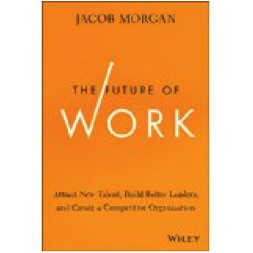


The Future of Work by Jacob Morgan
The Innovators by Walter Issacson. Did you know that one of the innovators behind the first computer studied at UW Madison? That “punch cards” were initially used for loom-based weaving? A low cost, infinite resource was a breakthrough for programming. Ada Lovelace, daughter of Lord Byron, wrote a series of notes in the 1840s that outlined the key concepts in the first electronic computer nearly 100 years before it was made in the 1940s? While parts of the book at too tedious for me, there are some very interesting facts that I never really appreciated.
Leaders Eat Last by Simon Sinek. I just started this one, but really enjoyed his previous Start with Why.
 ZMAB15