We’ve Been Here Before
Posted: November 11, 2015 Filed under: Change, Technology Leave a commentAs I approach the 30th year of my career, I begin to wax nostalgic about the changes I see in the workplace. Available people, process and technology are in the process of redefining the space we call “the office.” Beyond the physical space, “the office” includes how we work together and define productivity. While today’s tools may be new, we’ve been through this process before—several times, in my case.
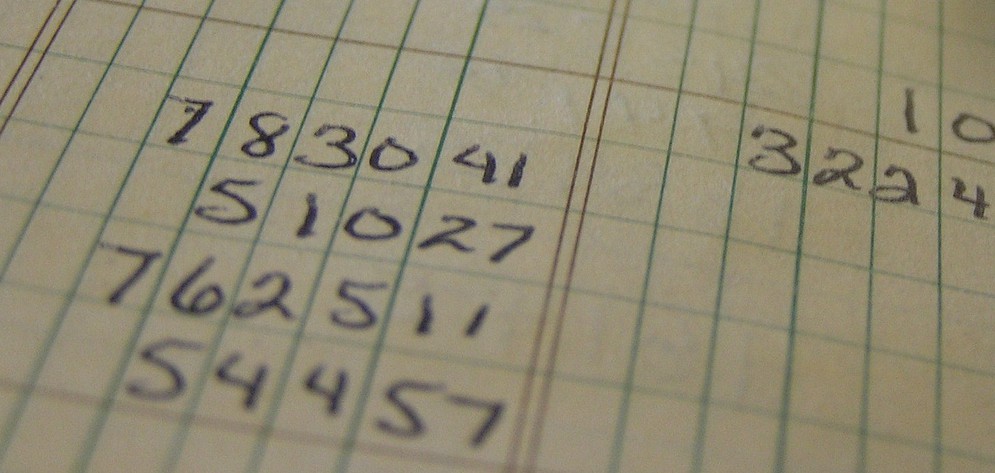 During the first three years of my career, I focused on transitioning from handwritten accounting schedules, forms and journal entries to electronic methods (13-column green pad to spreadsheets). Later, there were additional improvements in systems, access to data, and sharing of work (network shared drives and graphical charting capabilities).
The next phase was marked by a more complete transition from mainframe/mini technologies to server and personal computer technologies. Large ERP systems transitioned from green screens to client/server technology. Many new capabilities and features were enabled, including: scanning of receipts and shipments; electronic exchange of data and documents; and data importing and exporting.
Currently, we’re in the middle of transitioning from “behind the firewall” to “in the cloud.” This has dramatic implications, perhaps even more pronounced than in past phases. I believe that both the degree and speed of change are more dramatic and significantly faster than in the past. This is aided by the new low-cost, pay-as-you-go cloud options, a dramatic change in workforce demographics and global access to talent, markets and customers. No longer are large corporations at the forefront of the innovation, nor the adoption of new practices.
Transitions are endless and a natural part of life. What I find fascinating and important is looking at what have we learned from the past, evaluating what aspects are still relevant, and determining how lessons learned are applied in the current transition period.
Given my career, one of these keys learnings is around how we work. I believe we’re in a phase of “step-function” change, not “incremental” change. Put another way, we need to not look for little improvements in efficiency, but look at what is happening around us, create a shared vision of “what could be” and map a course toward this future state. As Michael Hammer noted in his seminal 1990 Harvard Business Review article Reengineering Work: Don’t Automate, Obliterate:
“It is time to stop paving the cow paths. Instead of embedding outdated processes in silicon and software, we should obliterate them and start over.”
Today’s key technologies—social, mobile, data/analytics and cloud—offer an opportunity to create new ways of working. We can leverage the same management disciplines: customer experience, quality principles, agile and responsive design, teaming and leadership principles, concepts of manufacturing efficiency and automation…and the list goes on. Outcomes must be relevant to the future environment and address the realities of competitive global economic talent, and resource challenges.
We’ve been here before. We need to stay future focused and use well-known disciplines to create the new future workplace. Incremental improvements in efficiency won’t be enough to be competitive in today’s and tomorrow’s marketplace.
Additional resources:
- Benedict Evans provides and extensive history of office technology in Office, messaging and verbs.
- Microsoft: Productivity Future Vision video will stretch your imagination. In many ways, we’re not that far off from many of these technologies. The integration and access to the data / user interface…well…that might be further away.
- From the AT&T Archives: Seeing the Digital Future (1961) includes their ambition to provide: “Solutions to changing problems and pressures. Answers to every growing needs and complexities.”
It’s Not About the Device
Posted: November 5, 2015 Filed under: Business, Technology | Tags: iPad Pro, Microsoft Surface Book, OneNote, Surface Pro 4 1 Comment A veritable cornucopia of new devices has recently been released (e.g. Microsoft Surface Book, Surface Pro 4, IPad Pro), as well as new phones, other tablets and updated laptops. I contend that their value is not in the device itself, but in the use case. Said another way, the magic is in how YOU use it, not about the nuanced technology features. Here are a few examples from my work life that show various devices in action in ways that meet my unique needs.
Capturing notes in a conference keynote setting
- Setting: Usual setup is rows of chairs with no tables.
- Devices: A tablet with stylus is ideal for electronic handwritten notes. I use my phone camera to take pictures of relevant slides or the speaker to help aid my memory.
- Process: Take rough notes, publish to PDF and place in electronic folder along with any pictures, handouts and a scan/copy of the conference agenda.
- Output: Summary document in electronic folder consisting of: a list of takeaways, further ideas to explore and/or additional resources (link to speaker’s website).
Facilitating a business meeting
- Setting: Conference room, in the office or offsite. I need access to multiple pieces of information and don’t want it to get in the way of the discussion. A laptop screen can be intrusive.
- Devices: Pen and paper in the form of a notepad or journal, plus tablet with OneNote app.
- Output: Notes and follow-up items. Additional documents are created or a summary of the meeting is created from handwritten notes, scans of any whiteboard or flip chart work. All items are placed in a electronic folder or in OneNote shared notebook.
Writing a monthly summary report
- Setting: Office.
- Devices: Laptop with multiple computer displays and three or four applications running.
- Output: A one-page word document. Ability to reference calendar, various emails, last month’s report and various other documents.
Two easy traps to fall into are: 1) thinking that one device will meet all of your needs and 2) the lure of the latest and greatest new shiny object in the marketplace. Before investing, consider this:
Being productive is about using multiple tools at hand in a way that works for you. Work process, collaboration and tools will continue to evolve. Devices will continue to proliferate and improve. There will never be a singular device for all situations and individuals.
The use cases dictate a combination of different features (technology and otherwise). My work situations are perhaps a bit more diverse than many. But the same rules likely apply to everyone—there are many tools and applications within your environments that can help personal productivity. Trying to make them all fit into once device is not practical, in my opinion.
When is Good Good Enough?
Posted: September 28, 2015 Filed under: Technology | Tags: HP EliteBook 9470m, iPad, iPhone, Motorola Startac, Motrola MicroTAC Leave a commentI’ve been pondering this for a while. I’ve had four or five different iPads and three or four different iPhones during the short period they have been available, usually quick to jump on the newest model.
And I’ve owned a significant number of laptops, both for business and personal use over the years. Interestingly, I’ve had my current laptop, an HP EliteBook 9470m, for over 18 months. This is a technology eternity for me. So what makes this product different from the others? It is solid, very functional, lightweight, and performs great (screen, keyboard, connectivity, etc.). Sure, there are new features available with newer models (touch screen, foldable 180 degree devices, etc.), but this hardware package is very good. Mostly importantly, it’s good enough to meet my needs.
Why? I believe that the “use cases” for this hardware have stabilized. My uses include creating content, connecting to corporate networks, traveling within the office, to the office, and on the road. Wi-Fi standards, battery life, disk drive technology have all reached a solid level. Video, audio, fingerprint scanning, and peripheral connections have stabilized. There are plenty of vendors trying to provide new reasons to buy new hardware, but I think good is good enough.
Has the marketplace reached the same point with smartphones? For iPhone 4 and 5 owners, many have voted by keeping their current models and have avoided the lure of an upgrade. Their phone is paid for and it’s doing its job. What more could they ask for?
The same goes with the iPad. There are plenty of 2 and 3 generation old devices that are satisfying what the user wants and more.
My conclusion is that the upgrade game is not solely about the hardware anymore—there is only so much one can do with the form factor. It is now about expanding the use cases and/or reducing the costs and expanding the market. That includes global markets outside of the U.S. that seem to have almost unlimited potential. Tech geeks like me will continue to be drawn to the newest shiny objects. But for the masses, they are going to need more compelling reasons to keep trading up.
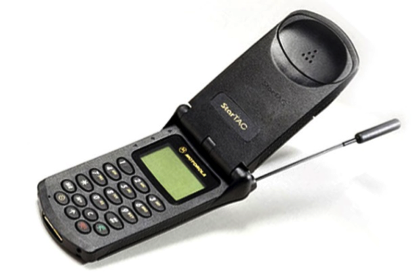
As an aside—remember the good ol’ days when everyone was excited about mobile phones getting smaller and smaller? When the Motrola MicroTAC was replaced by the Motorola StarTAC (1996), that was considered a big darn deal.

 ZMAB15