Boxes Old and New
Posted: September 25, 2014 Filed under: Change, Misc. | Tags: Crayola, Dropbox 1 Comment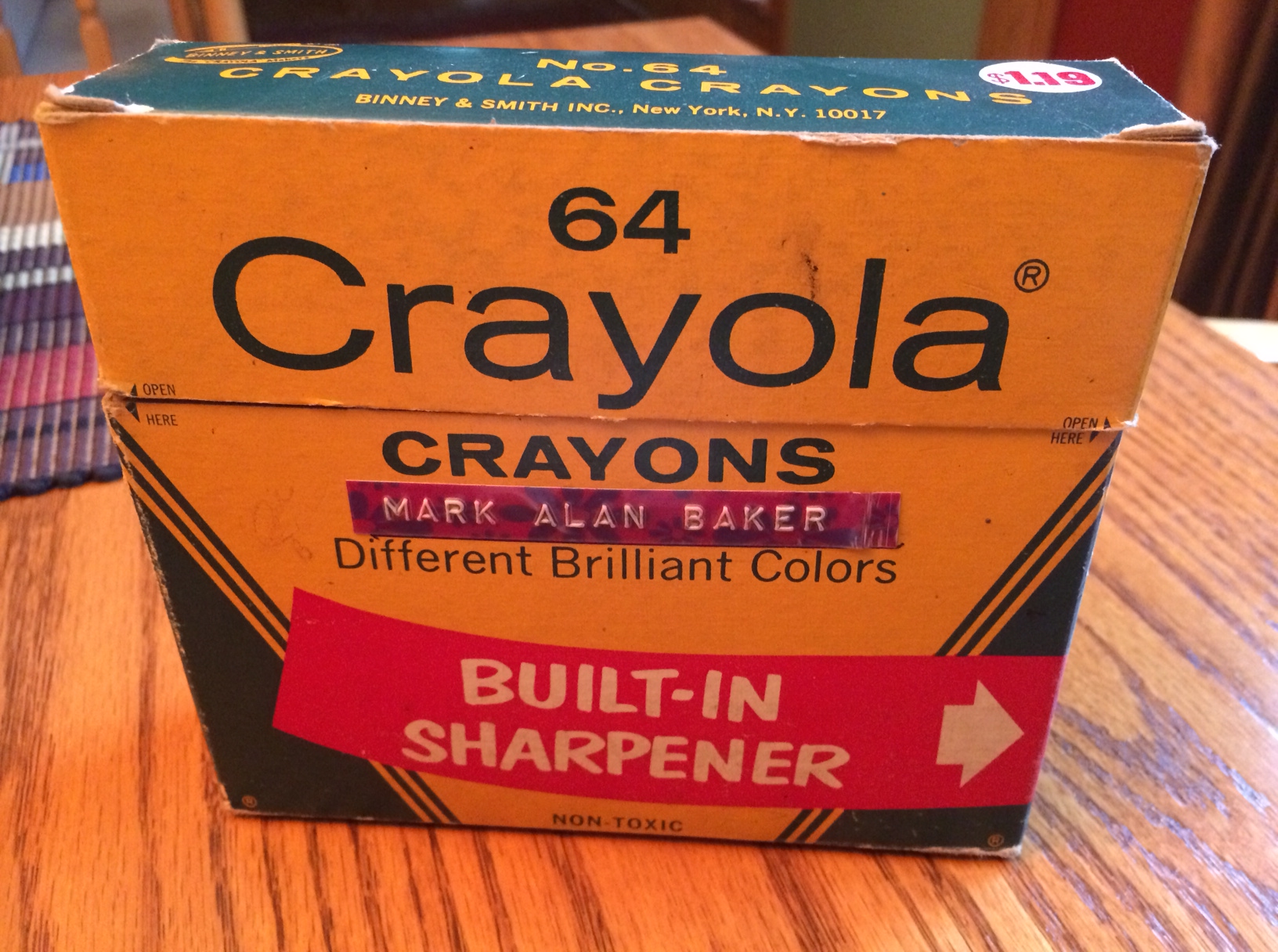
Photo by Mark Baker
For some strange reason (thanks Mom!) I still possess my grade school Crayola box. Back in the day, Crayolas were cool. What size box did you have? Did it have a sharpener? Another point of childhood pride was the school pencil box. Nestled in a flip-top homeroom desk, your pencil box was carefully labeled with your name and included the right pencils, a small ruler, safety scissors, an eraser and perhaps a protractor (the metal version with needle-sharp ends).
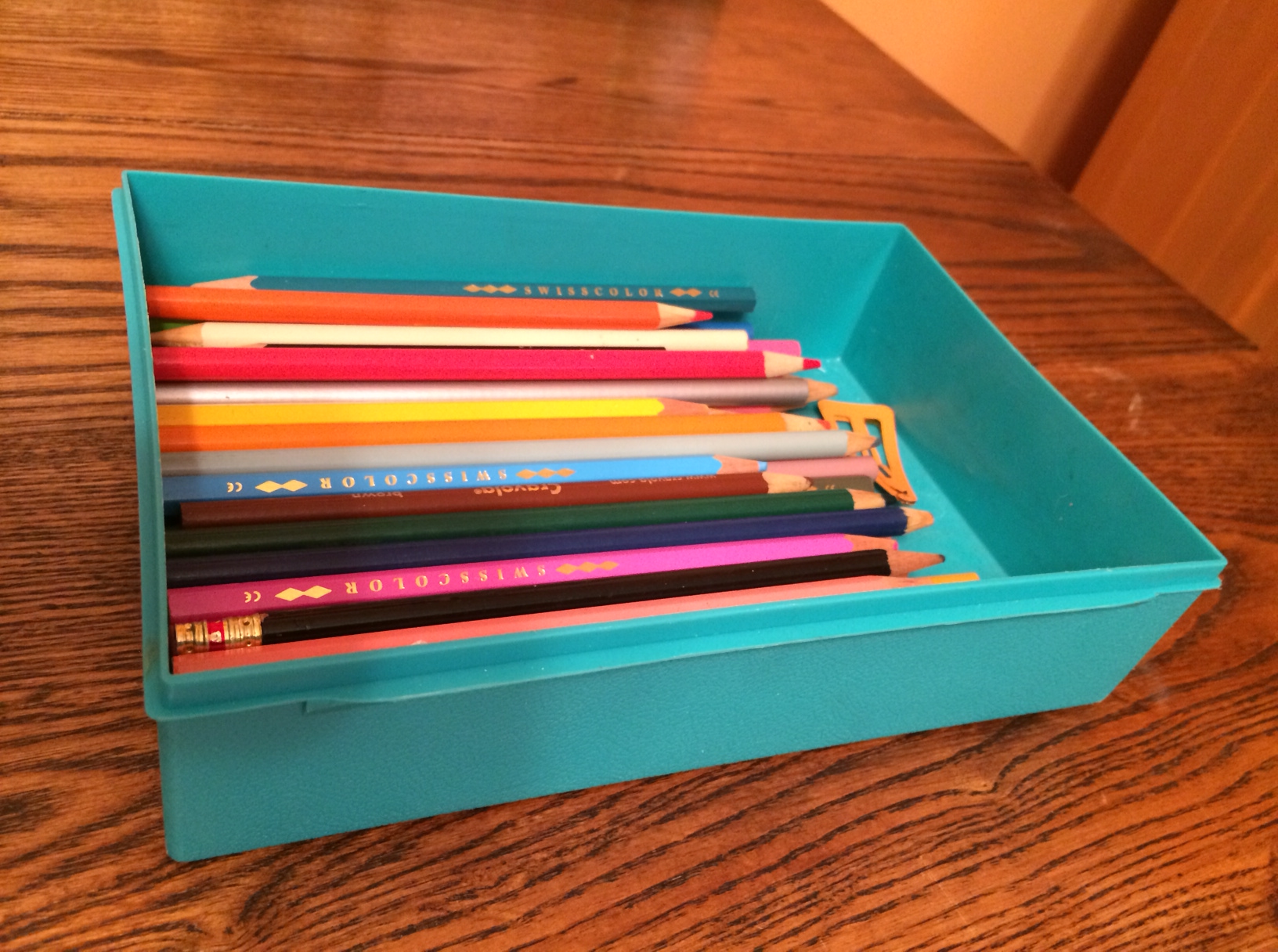
Photo by Mark Baker
Fast forward a bunch of years. As our daughters transitioned to far away places, we found pencil boxes left behind in their rooms (but no Crayola boxes). With all of the accoutrements required to outfit a college dorm or apartment these days, pencil boxes did not make the cut.
Instead, we set up Dropbox accounts with individual and shared folders. We loaded up key documents, synchronized photos across iOS devices, made images of official documents, and stored credit and identification card details. All of these resources can be accessed by any of us anywhere. Dropbox makes it easy and affordable: 1 Terabyte of storage is available for $100 per year under their pro plan. This is roughly twice my aggregated storage, which includes over 15,000 photographs and a decade worth of digital music and other files.
The irony of calling today’s robust, cloud-base resource a “box” is apparent. What a far cry from the humble little pencil box, but in today’s world, fills the same function. I’m not quite sure why this has me feeling a bit nostalgic. I don’t think it’s about the Crayola box per se, but more about the rapid evolution of technology, its ever-increasing role in our lives and how it shapes our interaction and communication. While my head understands that boxes hosted in the cloud hold unlimited capacity and potential, my heart misses the simple pleasure of opening a fresh box of crayons or neatly organizing my pencil box for the new school year.
R.I.P. iPod
Posted: September 22, 2014 Filed under: Technology | Tags: Apple, iPad, MP3 Leave a comment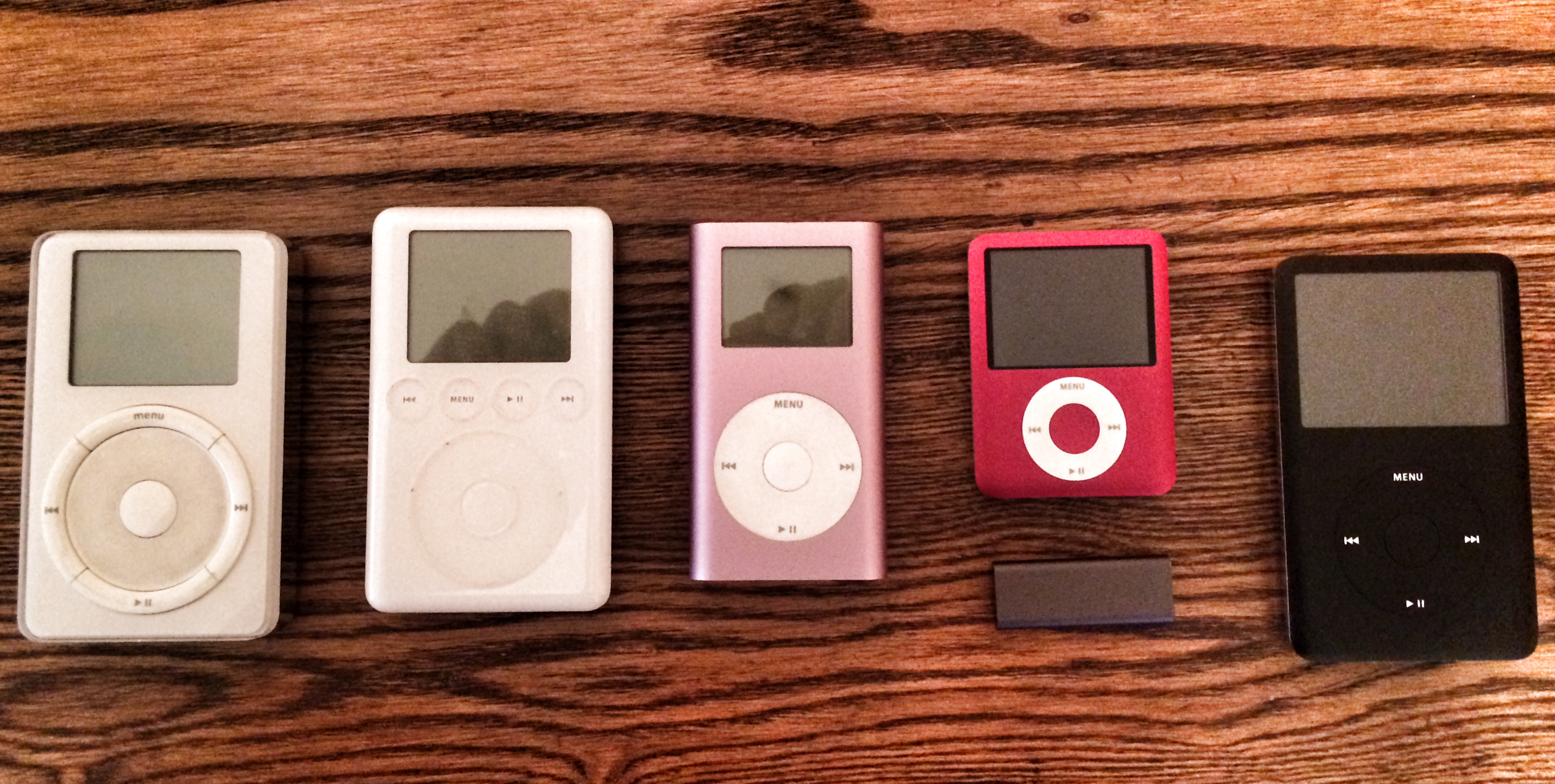
A veritable treasure trove of iPods collected at the Baker household. It’s quite possible there are a still a couple more hidden somewhere. Photo by Mark Baker.
First, the headline grabbed me: On Death and iPods: A Requiem. Then this well written article hooked me, its larger message a reflection on something I try to bring to the table every day. We often have surface conversations about the shiny new hardware (or in Apple’s case, the media fawning over the Apple announcements and the “just one more thing” shtick). However, focusing on the hardware often misses a crucial point. Hardware has features, but what we value are the benefits. The benefits are wrapped up in how we can do new things, how things become easier, or at the highest level, how we alter behavior in response to new capabilities.
The iPod fundamentally changed how we learn about, purchase, organize, share and consume music. Parents could no longer yell at their kids to turn the radio down. Kids didn’t have to share the stereo or tote around a massive boom box. Portable MP3 players drove the rapid expansion of new categories of accessories, such as docking stations, $400 stylized and branded headphones and Bluetooth speakers. And how can we forget the iconic white headphones?
In the end, like all technology, it’s not about the hardware. It’s about how it changes what we do. RIP iPod. You’ll be staying in my device museum to remind me of the good old days!
For more information on the history of the iPod and iTunes, this interesting timeline shows how far we’ve come.
Weekly Download 14.18
Posted: September 12, 2014 Filed under: Weekly Download | Tags: Daniel Goleman, Laura Santos, monkeynomics 1 Comment Here’s a recap of news and notes from around the Web that caught my attention over the past week or so.
Have you heard of “monkeynomics?” Psychologist Laurie Santo finds amazing parallels between monkey and human behavior. Her TED Talks A monkey economy as irrational as ours looks at silly choices and why we continue to make consistent errors.
The errors we make are actually predictable. We make them again and again. And they’re actually immune to lots of evidence. When we get negative feedback, we still, the next time we’re face with a certain context, tend to make the same errors.
Author Daniel Goleman (Emotional Intelligence) is back with a new take on success with Focus: the Hidden Driver of Excellence.
The persistent financial demands of Wall Street have trumped the informational needs of Main Street. Print has become too much of a drag on earnings, so media companies are dividing back up and print is being kicked to the curb. Print Is Down, and Now Out presents a bleak outlook.
Set Your Internal GPS for a smooth route to any destination. Goal clarity matters.
 ZMAB15