My First MOOC
Posted: August 24, 2015 Filed under: Education | Tags: MOOC, U.Lab 1 Comment Last fall I took my first Massive Open Online Course (MOOC). I originally registered for The Age of Globalization (see The Inquisitive Learner Walks the Talk), but due to scheduling conflicts I had to cancel. Instead, I took U.Lab: Transforming Business, Society, and Self. This is the same course profiled in a Huffington Post article that the author refers to as, “…what well may be the most interesting project of my life.”
I wouldn’t go quite that far, but it was certainly a fascinating experience. How many times can you involved in something that is truly global? Literally people representing every continent were present, some 25,000+ strong.
Here’s a quick review of the logistics and the three course components:
- Live webcasts, all at 9 a.m. ET, broadcast from a tech-enabled classroom at MIT. The show went on even when snowstorms shut down Boston. The president of MIT, who was out of the country, had to give permission to allow the class to be held even though the university was closed. Each session had a main presenter and frequently a few other people to mix things up. One of my favorite things was a note taker who drew a summary of the content as the presenter was speaking. The concurrent visual representation helped add another dimension to the learning.
- Hubs were self-forming local groups of people who you could participate with jointly. There was a Madison hub, Shanghai hub, London hub, and so on. Hub hosts provided the gathering venues.
- Coaching circles facilitated discussion, listening and dialogue. A guide was provided to lead the way. Between the live presentations, these small groups met either virtually or in-person to bring content to life.
You’d think it would be difficult to have an interactive component during the live sessions with so many people involved. It was actually made easy by using existing technology: the Twitter platform. Easy, that is, assuming you are of a generation that considers Twitter a native language. Participants were encouraged to provide input and comments, pictures and doodles, via Twitter (#ulab), generating hashtag clouds for the key items of interest for the presenters to address. Sometimes a presenter would pose a question and request answers via a specific hashtag.
As with most things, there are pros and cons that merit consideration in deciding if a MOOC is for you.
- The organizers and presenters were real professionals. It’s great to have access to world-class content that fits into your schedule without travel.
- It was easy to consume information in small chunks, and the hybrid format with coaching circles and hubs helped reinforce the content.
- This is just one approach to independent learning. Those of us who have access to alternatives could read a book or talk to an expert, just to name a few options. If you don’t have access to anything else, a MOOC could be transformative.
- You need to be able to commit the time for the live session and invest in the reading and preparation. The standard methods of accountability that are inherent with in-person educational experiences are not in place with MOOCs.
- It’s not a perfect substitute for live education. There is something to be said for blocking out your schedule to attend a school or conference. You have dedicated space and time for learning and increased connections to others.
- The economics of MOOCs sparked my curiosity. Is the model economically sound, or does an organization like MIT justify doing it just for the greater good? How are providers going to get past the free versus paid barrier? I’ve seen some classes that you can attend for free, but then have to pay a fee to get awarded continuing professional education credit.
After weighing all the factors, it’s on my docket to take another MOOC when I’m less busy. The bigger challenge may be settling on a topic, as there is probably a MOOC-based approach to just about anything. Social psychology? Psychology anthropology? Economics? We’ve all heard comments like, “There’s more information published in one Sunday edition of the New York Times than people consumed in their lifetime in the 1600s” or “It would take you 200,000 years to read everything that’s on the internet.” There is so much great stuff to consume, so little time. At least now there is a very rich mechanism to distribute it globally.
Additional resources:
They’re Here
Posted: August 20, 2015 Filed under: Business, Demographics, Leadership | Tags: baby boomers, Millenials Leave a commentIt’s difficult to overstate the impact of millennials in the workplace. An interesting tension has developed as they have become the largest working generation, but their power is tempered by the fact that many organizations are led by their baby boomer predecessors. In roughly ten years, however, millenials will be taking the helm in droves. How differences in work styles, lifestyles and values are respected (or not respected) will shape the future of business.
 If you’ve ever found yourself questioning the work ethic of millenials or simply not understanding how and why they do what they do, take a gander at Why Millennials Understand the Future of Work Better Than Anyone Else. Maybe you’ll come to appreciate that, “…millennials are perfectly positioned to create the sustainable independent work economy that we—and they—need.”
If you haven’t done so already, getting up to speed on the nature and traits of millennial employees should be a priority for any leader. The payoff will be not only be easing the transition, but also maximizing the talents of this unique group.
Additional resources:
- How Aging Millennials Will Affect Technology Consumption
- Instill a Sense of Purpose, Unleash Better Performance
- If Millennials Ruled the Corporate World
- This year, Millennials will overtake Baby Boomers
- Millennials a Catalyst for Innovation
- The Deloitte Millennial Survey 2015
Visiting Mister Softee*
Posted: August 17, 2015 Filed under: Technology | Tags: Microsoft, Power BI Leave a commentA few weeks ago I visited Microsoft’s Redmond campus for the second time. August 2007, a short eight years ago, was the first. Some things had changed—the presentations were more business solution focused and demonstrated some impressive capabilities (more on that later). Some things hadn’t changed—the experience still seemed impersonal and feature/function focused.
It made me think how different our technology landscape is today than it was then. Here are a few highlights.

Microsoft and their leadership team is pushing rapidly to drive user adoption to a full cloud Microsoft offering. During our meetings it was all about online experiences across productivity tools (Office 365, operating system, PC and Mobile devices) as well as backend systems (corporate applications, databases, and related tools like email, security, identity, access management, etc). They provided two powerful examples of leveraging this technology, one from their legal department and one from their finance department. Matter Center demonstrates collaboration across organizations leveraging multiple communication and collaboration tools. Checkout the video in the link above. This is the environmental context for thinking about how our technology expectations have changed.
PowerBI is their cloud-based data visualization platform. The technology was most impressive and demonstrates next generation of tools coming available in this space. Key benefits included the ease of use, its catalog method, familiar features and natural language query. Even more impressive, however, was how it has remade their finance function into providers of high value consulting to their business leaders. No longer do they spend countless low value hours assembling slide decks and canned reports. Now, they help the business decision makers formulate questions and insights backed with a robust visualization of data. See Power BI for Finance and Microsoft Finance Leverages Power BI to Transform Reporting.
My takeaways from this Redmond visit were twofold. First, it really brought home how rapidly and radically our expectations for technology have shifted (as noted in the table above). Secondly, it painfully portrays the difficulty a company with Microsoft’s legacy, financial and talent resources has in changing its products, business model, organization and culture to meet the new expectations. This makes me examine the challenge of being in professional services (accounting, tax and consulting) and the resulting shift in expectations for an I.T. department. Do our clients (external and internal) realize the shift in expectations? Is there a sense of what is possible? What is our role in leading and facilitating change?
It reinforces my motivation of getting exposure to different industries, areas of the country and world, and different cultures. We must challenge our perspectives and work to understand how others have approached them. How does it map to our own personal, professional and organization’s outlook? As always, I have more questions than answers, but questioning the status quo is a solid first step toward transformation.
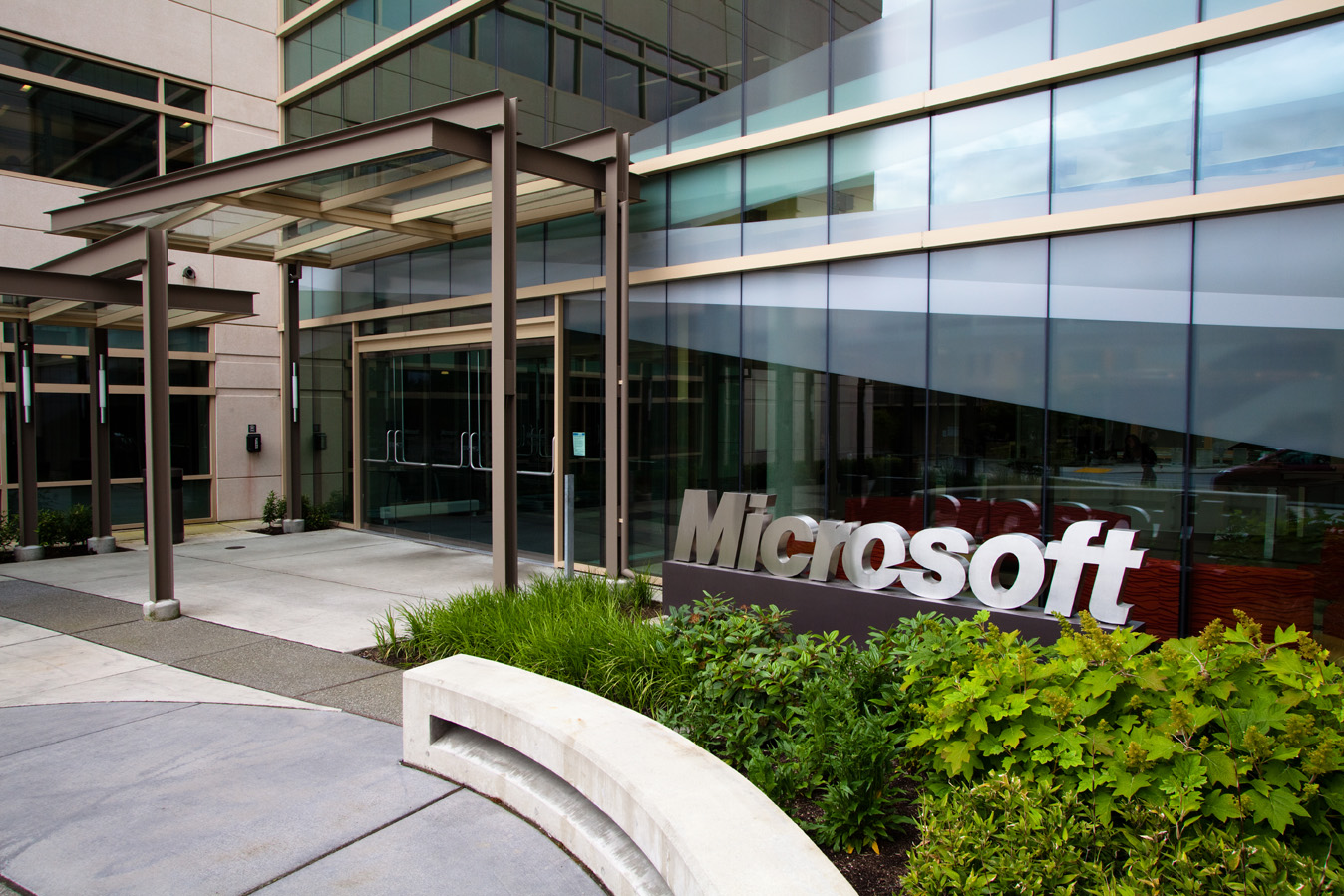
*Microsoft’s nickname of Mister Softee comes from its stock exchange symbol: MSFT.
 ZMAB15